English


Understanding Wall-Mounted and Rack-Mounted Lithium Batteries
Before diving into the technical installation steps, it is crucial to establish a foundational understanding of what differentiates these two energy storage architectures.
Wall-Mounted Battery Systems
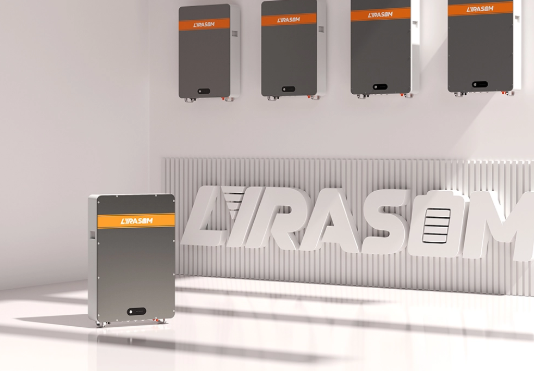
As the name implies, wall mounted battery storage batteries are designed to be anchored directly to a sturdy vertical surface. Their primary design philosophy centers around aesthetics, space-saving, and integration. Because they do not consume floor space, they are highly favored in modern residential setups, such as garages, basements, or utility rooms. These units are typically self-contained, meaning the battery cells, Battery Management System (BMS), and necessary interfaces are housed in one sleek, ultra-thin cabinet.
Rack-Mounted Battery Systems
Rack-mounted batteries take a highly modular, industrial approach to energy storage. These standardized battery modules (often designed in standard 19-inch formats) slide securely into tall metal cabinets or server racks. Because you can stack multiple modules vertically and wire them in parallel, rack-mounted systems offer immense scalability. They are the backbone of Commercial and Industrial (C&I) energy storage, microgrids, and data centers where high capacity is required.
| Feature | Wall-Mounted Battery | Rack-Mounted Battery |
| Installation | Wall Bracket / Anchors | Metal Rack Cabinet |
| Capacity | Low to Medium (5-20kWh) | Medium to High (20-500kWh+) |
| Expansion | Moderate (Parallel connection) | Excellent (Highly scalable) |
| Application | Residential Home ESS | C&I ESS, Data Centers |
Pre-Installation Planning Checklist
Skipping the planning phase is the leading cause of installation failures and safety hazards. Before touching a single wire, installers must execute a thorough site and load assessment.
1. Site Assessment
Not every room is suitable for lithium battery storage. Installers must carefully evaluate the environment to ensure it meets strict operating parameters.
Available Space: Is there adequate clearance around the battery for wiring and future maintenance?
Wall Strength: For wall-mounted units, the wall must be structural (concrete or reinforced brick) to hold 50kg to 150kg of dead weight. Drywall is never acceptable.
Ventilation: Batteries generate heat during rapid charge and discharge cycles. The room must have adequate airflow to prevent heat accumulation.
Temperature: Extreme cold restricts charging, and extreme heat degrades the battery's lifespan. An insulated, climate-controlled environment is highly recommended.
2. Load Analysis
To size the battery correctly, you must calculate the user's daily energy consumption, understand their peak load (when multiple appliances turn on simultaneously), and decide what must stay powered during a blackout.
| Load Type | Example Appliances |
| Critical Loads | Lights, Wi-Fi Routers, Medical Equipment |
| Essential Loads | Refrigerator, Water Pump, Microwave |
| Whole House Loads | HVAC, Electric Oven, EV Charger |
3. Battery Capacity Calculation
Sizing the battery accurately ensures the client receives enough backup power without overspending on unnecessary capacity. Based on typical daily consumption, here is a general sizing matrix for residential energy storage:
| Daily Consumption (Grid + Solar) | Suggested Battery Capacity |
| 5 - 10 kWh | 10 kWh Battery |
| 10 - 20 kWh | 15 - 20 kWh Battery |
| 20 - 30 kWh | 20 - 30 kWh Battery |
Wall-Mounted Lithium Battery Installation Guide
Wall-mounted batteries offer a sleek aesthetic but require precise installation techniques to ensure they do not become a physical hazard. Follow these professional steps for a secure setup.
Step 1: Choose the Installation Location
The ideal location is indoors, away from direct sunlight, rain, and extreme humidity. Garages or utility rooms are preferred. Ensure the battery is installed away from heat sources like water heaters or furnaces, and maintain at least 30cm of clearance on all sides for optimal cooling.
Step 2: Verify Wall Load-Bearing Capacity
Lithium batteries are incredibly dense and heavy. Before drilling, you must verify the structural integrity of the wall. Solid concrete walls, structural brick walls, or heavily reinforced wooden studs are mandatory. Installing heavy batteries on standard drywall without hitting studs will result in structural failure.
| Battery Size | Estimated Weight Range |
| 5 kWh | 50 - 60 kg |
| 10 kWh | 90 - 120 kg |
| 15 kWh | 130 - 180 kg |
Step 3: Install Mounting Brackets
Using a level, mark your drill holes accurately. Use heavy-duty expansion anchor bolts (typically M8 or M10) designed for concrete or masonry. Once the bracket is securely fastened, two installers should carefully lift the battery unit and lock it onto the bracket, ensuring any anti-vibration pads are correctly aligned to reduce noise.
Step 4: Connect Battery and Inverter
Ensure the entire system is powered off. First, connect the primary Grounding wire to protect against electrical faults. Next, connect the heavy-gauge DC power cables (positive to positive, negative to negative) between the battery and the hybrid inverter. Finally, connect the Communication cables (usually CAN or RS485) so the inverter can read the battery's BMS data.
Step 5: BMS Configuration and Testing
Power on the system. Access the inverter's interface and configure it to recognize the specific battery chemistry (e.g., LiFePO4). Verify that the BMS is accurately reporting the voltage, State of Charge (SOC), and that no warning alarms are triggered. Perform a brief charge and discharge test to ensure the system is operational.
Rack-Mounted Lithium Battery Installation Guide
Rack-mounted systems are designed for high-capacity industrial and commercial setups. Because multiple modules are connected, precise execution and cable management are paramount.
Step 1: Prepare the Rack or Cabinet
Start with a sturdy, standardized metal server rack or a dedicated battery cabinet. Ensure the cabinet has an appropriate IP rating if placed in harsh environments. The cabinet must feature adequate ventilation, such as built-in cooling fans, and dedicated channels for clean cable management to prevent wire chafing.
Step 2: Install Battery Modules
Always install battery modules starting from the bottom of the rack and working your way to the top. This lowers the center of gravity, preventing the rack from becoming top-heavy and tipping over during installation or in the event of seismic activity.
Step 3: Connect Parallel Modules
Once all modules are slotted and secured with rack screws, connect the parallel DC wiring. Route the positive cables to the positive busbar and negative cables to the negative busbar. Crucially, connect the communication bus (CAN/RS485) in a daisy-chain configuration so the master module can communicate with all slave modules simultaneously.
Step 4: Integrate PCS and EMS
In commercial systems, the battery rack must communicate with the Power Conversion System (PCS) and the overarching Energy Management System (EMS). The EMS monitors grid tariffs, solar production, and facility loads, directing the PCS to charge or discharge the rack-mounted batteries for peak shaving or load shifting.
Step 5: Commissioning and Functional Testing
Before handing over the site, perform rigorous functional testing. Execute a full charge test to ensure cell balancing is working. Perform a discharge test under a heavy load to check for voltage drops or hot connections. Finally, trigger the emergency stop mechanism to verify that the system isolates power instantly.
Safety Requirements for Lithium Battery Installation
While modern lithium batteries are incredibly safe, improper installation can introduce severe risks. Strict adherence to safety protocols is non-negotiable.
Temperature Control
The operational lifespan of a lithium battery is heavily dependent on ambient temperature. While they can operate in wider ranges, maintaining the room temperature between 15°C and 30°C (59°F to 86°F) guarantees maximum efficiency and prevents premature cell degradation.
Ventilation Requirements
Although LiFePO4 batteries do not vent toxic gases during normal operation like old lead-acid batteries, the inverters and BMS generate heat. The installation room must have active or passive ventilation to prevent heat accumulation, which could push the battery out of its safe operating parameters.
Fire Protection Measures
For commercial installations, active fire suppression systems (such as aerosol or clean agent gas) should be integrated into the battery cabinet. For residential setups, a smoke detector should be installed in the same room, along with an easily accessible emergency DC disconnect switch.
Electrical Protection
No system is complete without robust electrical protection hardware installed between the battery, inverter, and grid.
| Protection Device | Primary Purpose |
| DC Fuse | Protects cables and batteries from severe overcurrent conditions. |
| DC Circuit Breaker | Provides manual isolation for safe maintenance and automatic fault tripping. |
| Surge Protection Device (SPD) | Shields sensitive BMS electronics from lightning strikes and grid voltage spikes. |
Wall-Mounted vs Rack-Mounted Lithium Batteries: Which One Should You Choose?
The ultimate decision comes down to the scale of the project, available space, and budget. Use this comprehensive comparison to guide your selection.
| Feature | Wall-Mounted Batteries | Rack-Mounted Batteries |
| Capacity Range | 5 kWh - 20 kWh | 20 kWh - 500 kWh+ |
| Physical Footprint | Small (Zero floor space) | Medium to Large (Requires cabinet footprint) |
| Installation Difficulty | Easy (Plug and Play) | Professional (Requires cabinet assembly & complex wiring) |
| Expansion Capability | Good (Limited by wall space) | Excellent (Stack modules vertically) |
| Residential Use | Excellent | Good (If a large utility room is available) |
| Commercial Use | Limited | Excellent |
| Upfront Cost | Lower (All-in-one unit) | Higher (Requires purchasing racks & busbars) |
Choose Wall-Mounted Batteries If:
You are building a Residential ESS.
You are installing in a villa or upscale home.
You are powering a small office or clinic.
Floor space is highly restricted.
Choose Rack-Mounted Batteries If:
You are developing a Commercial or Industrial ESS.
You need massive energy reserves for a data center.
You are building a scalable microgrid.
You anticipate needing to easily add capacity later.
Why LiFePO4 Is the Preferred Chemistry for Energy Storage Installation
Regardless of whether you choose a wall-mounted or rack-mounted format, the internal chemistry is what dictates performance. Leading manufacturers like Lyrasom strongly advocate for Lithium Iron Phosphate (LiFePO4) over legacy chemistries for several critical reasons.
Superior Safety
LiFePO4 is renowned for its exceptional thermal stability. Unlike NMC (Nickel Manganese Cobalt) batteries which can overheat and catch fire if punctured or overcharged, LiFePO4 chemistry is highly resistant to thermal runaway, making it the safest option for indoor installations.
Long Cycle Life
Energy storage is a long-term investment. While traditional lead-acid batteries degrade rapidly, high-quality LiFePO4 cells can reliably deliver over 6,000 deep discharge cycles, translating to a lifespan of 15 to 20 years.
| Battery Chemistry | Typical Cycle Life |
| Lead Acid / AGM | 500 - 1,000 Cycles |
| NMC (Lithium-Ion) | 3,000 - 5,000 Cycles |
| LiFePO4 (LFP) | 6,000 - 10,000 Cycles |
High Efficiency and Low Maintenance
With a round-trip efficiency exceeding 95%, practically all the solar energy stored in a LiFePO4 battery is available for use. Furthermore, unlike lead-acid systems that require regular watering and ventilation checks, LiFePO4 systems are entirely maintenance-free.
Emerging Trend: Sodium-Ion Batteries for Energy Storage Systems
While LiFePO4 dominates today, forward-thinking ESS manufacturers are heavily investing in Sodium-Ion battery technology. As global demand for lithium skyrockets, sodium offers a sustainable, abundant alternative that eliminates reliance on constrained lithium supply chains.Why the industry is turning to Sodium-Ion:
Lower Material Cost: Sodium is thousands of times more abundant than lithium, drastically lowering raw material costs for large-scale ESS projects.
Better Low-Temperature Performance: Sodium-ion batteries suffer almost no capacity loss in freezing temperatures, making them perfect for grid storage in cold climates where lithium batteries struggle.
Improved Supply Chain Security: Uncoupled from the volatile lithium market, sodium-ion offers stable pricing.
Safety in Transport: They can be discharged to 0 volts without damaging the cells, making transportation completely safe and fire-free.
| Feature | LiFePO4 | Sodium-ion |
| Safety | Excellent | Excellent |
| Cost Potential | Medium | Lower |
| Low Temperature | Good | Significantly Better |
| Market Maturity | Mature | Emerging |
Common Installation Mistakes and How to Avoid Them
Even with the best hardware, a poor installation will throttle performance. Avoid these common pitfalls:
Poor Ventilation
Consequence: Installing batteries in cramped, unventilated closets leads to rapid heat buildup. This forces the BMS to throttle charge rates to prevent battery overheating, drastically reducing system efficiency and lifespan.
Incorrect Cable Sizing
Consequence: Using DC cables that are too thin for the current load results in a significant voltage drop. In worst-case scenarios, the cables can overheat, melt their insulation, and cause an electrical fire.
Improper Grounding
Consequence: Failing to properly bond the battery chassis to the earth ground creates a massive safety risk for operators and leaves the sensitive BMS vulnerable to electrical surges.
Battery-Inverter Compatibility Issues
Consequence: If the battery's BMS protocol does not match the inverter's software, it leads to a communication failure. The inverter will not know the battery's State of Charge and will refuse to charge or discharge.
Ignoring Future Expansion Needs
Consequence: Placing a wall-mounted battery in a tight corner with no room for a second unit makes system upgrades difficult and expensive when the client's energy needs inevitably grow.
Why Choose Lyrasom Energy for Battery Cells and Energy Storage Solutions?
Finding a reliable hardware partner is the most critical decision for system integrators and installers. Lyrasom Energy is not just an assembler; we are a foundational manufacturer driving the technology that powers advanced energy storage systems globally.
Advanced LiFePO4 and Sodium-Ion Cell Manufacturing
We manufacture the core power source. Lyrasom specializes in producing high-performance 32140 and 40140 LiFePO4 cells, as well as pioneering next-generation Sodium-Ion battery cells. By controlling the cell manufacturing process, we guarantee high safety, long cycle life, and ultra-stable performance across all our end products.
Strong Research and Development Capabilities
Innovation is embedded in our DNA. Through strategic partnerships with leading institutions like Nanjing University and Central South University, we have established advanced Doctoral Workstations and Battery R&D Centers to continuously push the boundaries of energy density and safety.
Certified Manufacturing Quality
Our strict quality control spans from raw material selection to final delivery. Lyrasom products carry vital international certifications, including UL, CE, and BIS, ensuring compliance and peace of mind for global project developers.
Global Supply Experience
With a footprint serving over 70+ countries, Lyrasom has deep experience navigating the complex energy markets of the USA, Germany, Japan, and India. We understand local grid requirements and deliver on time.
Complete Energy Storage Product Portfolio
| Product Category | Primary Application |
| LFP and Sodium Ion Cells | Battery Pack Manufacturing & Integration |
| Residential Energy Storage Battery | Home Solar Storage (Wall-mounted & Stacked) |
| Industrial & Commercial ESS | Peak Shaving, Microgrids & Backup Power |
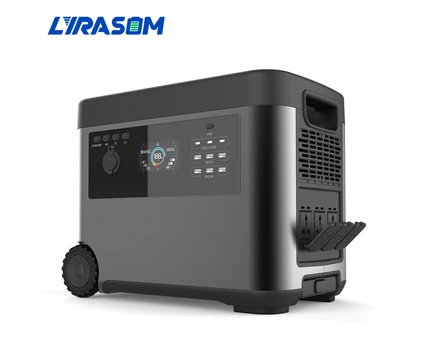
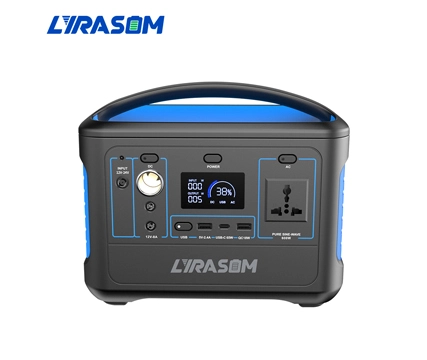
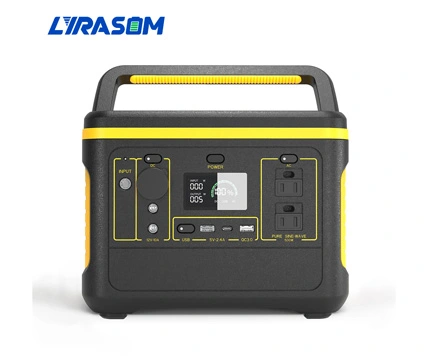
| Portable Power Station | Mobile Energy Storage & Off-Grid Camping |
Frequently Asked Questions (FAQ)
Can lithium batteries be installed indoors?
Yes, provided that proper ventilation, temperature control, and local fire safety regulations are strictly addressed. LiFePO4 chemistries are particularly safe for indoor residential use.
What is the difference between wall-mounted and rack-mounted batteries?
Wall-mounted batteries are compact, aesthetically pleasing, and save floor space, making them ideal for residential applications. Rack-mounted systems are modular, highly scalable, and fit into standard cabinets, offering the massive capacity required for commercial and industrial projects.
How much space is required for a wall-mounted battery?
Most residential wall-mounted systems require only 0.5 to 1 square meter of clear wall space, ensuring they fit easily in garages or basements without encroaching on living areas.
Are LiFePO4 batteries safe for indoor installation?
Yes. LiFePO4 (Lithium Iron Phosphate) batteries are widely regarded as the safest lithium battery chemistry on the market due to their excellent thermal stability and near-zero risk of thermal runaway.