English


Short on time? Here is the bottom line comparing the two dominant energy storage formats.
| Criteria | Wall Mounted Battery | Rack Mount Battery |
| Best For | Residential ESS | Commercial ESS |
| Capacity Range | 5–20 kWh | 20–500 kWh+ |
| Installation | Easy (Plug-and-play design) | Professional (Requires cabinet assembly) |
| Expansion | Moderate (Limited by wall space) | Excellent (Stackable modules) |
| Cost per kWh | Slightly Higher (Aesthetics & casing) | Lower (Standardized bulk modules) |
| Maintenance | Low (Sealed unit) | Easy Module Replacement |
| Space Requirement | Minimal (Uses vertical wall) | Moderate (Requires floor footprint) |
Choose Wall Mounted Batteries If:
You are building a home solar storage system.
Floor space in your garage or utility room is highly limited.
You want a fast, aesthetically pleasing installation.
Choose Rack Mount Batteries If:
You are developing a Commercial or Industrial ESS.
You anticipate future expansion and need massive scalability.
Lower cost-per-kWh and long-term serviceability are top priorities.
What Is a Wall Mounted Battery?
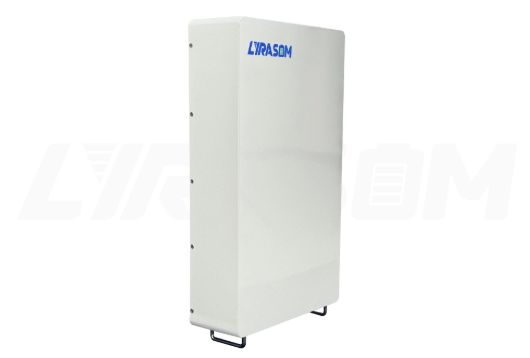
A wall mounted battery storage is a compact, highly integrated energy storage system explicitly designed to be secured to a structural wall. Engineered with aesthetics and space-saving in mind, these units house the battery cells, Battery Management System (BMS), and necessary wiring interfaces within a single, sleek casing. Because they utilize unused vertical space rather than consuming valuable floor space, they have become the gold standard for residential solar installations. Typically ranging in capacity from 5kWh to 20kWh, they are perfectly sized to handle daily home energy loads, shift peak usage, and provide backup power during grid outages. Primary Applications: Homes, Villas, and Small Offices.
What Is a Rack Mount Battery?
A rack-mount battery (often referred to as a server rack battery) is a modular energy storage system. Instead of an all-in-one housing, the system consists of standardized battery modules—usually sized to fit standard 19-inch telecom or server racks. These modules are slid into a heavy-duty metal cabinet and wired in parallel. The defining characteristic of a rack-mount system is its extreme flexibility and scalability. If a facility needs more power, installers simply add more racks and slide in additional modules. This architecture allows capacities to scale effortlessly from 20kWh to well over 500kWh, making them the backbone of heavy-duty energy infrastructure. Primary Applications: Commercial Buildings, Factories, Data Centers, and Microgrids.
Wall Mounted vs Rack Mount Batteries: 10 Key Differences
To make an informed purchasing decision, buyers must understand how these two systems diverge across ten critical operational categories.
1. Installation Method
Wall Mounted: These batteries are anchored directly to a structural wall using heavy-duty brackets. The installation is generally faster, requiring two technicians to lift the unit onto the bracket, followed by simple plug-and-play wiring to the inverter. Rack Mounted: This requires the assembly of a metal cabinet on the floor. Installers then slide heavy, individual battery modules into the rack, securing them with screws. It demands meticulous cable management to route parallel DC and communication busbars safely.
2. Space Utilization
| Feature | Wall Mounted | Rack Mounted |
| Floor Space Consumed | None | Required |
| Vertical Utilization | Excellent | Good |
Conclusion: If floor space is limited, the wall-mounted battery is the undeniable winner
.
3. Battery Capacity
| System Type | Typical Capacity Range |
| Wall Mounted | 5 kWh - 20 kWh |
| Rack Mounted | 20 kWh - 500 kWh+ |
Conclusion: For large-scale projects requiring massive energy reserves, rack-mounted systems are the only viable solution.
4. Scalability
Wall Mounted: While you can connect multiple wall units in parallel, expansion is physically limited by the amount of available, structurally sound wall space in the room. Rack Mounted: Engineered specifically for modular expansion. You can continue stacking modules vertically within a cabinet, and then place multiple cabinets side-by-side to create megawatt-scale systems.
5. Installation Cost
| Cost Factor | Wall Mounted | Rack Mounted |
| Hardware Cost (per kWh) | Slightly Higher | Lower |
| Labor / Installation Cost | Lower (Faster install) | Higher (Complex wiring) |
| Future Expansion Cost | Higher | Lower |
6. Maintenance and Serviceability
Wall Mounted: These are generally sealed units. If a critical internal component fails, the entire heavy unit often needs to be unmounted and returned to the manufacturer for service. Rack Mounted: Because it is modular, if one battery module fails, a technician can simply slide out the defective module and replace it without taking the entire energy storage system offline. This makes rack systems vastly superior for long-term commercial operations.
7. System Reliability
Rack systems often feature advanced redundancy. Through sophisticated master/slave BMS configurations, a rack system can bypass a faulty module and keep the facility powered. This level of reliability is critical for data centers and hospitals, whereas a wall unit failure might result in a complete loss of backup power.
8. Cooling and Thermal Management
| Cooling Type | Wall Mounted | Rack Mounted |
| Passive Cooling (Heatsinks) | Common | Less Common |
| Active Cooling (Fans/HVAC) | Optional / Rare | Standard built into cabinets |
9. Application Scenarios
Wall Mounted: Tailor-made for Residential ESS, upscale villas, and small apartments where aesthetics and compact design matter most. Rack Mounted: The workhorse for Commercial ESS, data centers, industrial factories, and large-scale agricultural microgrids.
10. Long-Term ROI
For smaller residential projects, the fast installation and lower hardware needs of a wall-mounted unit yield a faster ROI. However, for large projects, the lower cost-per-kWh and modular repairability of a rack-mounted system make it the clear winner for long-term financial returns.
Which Battery Type Is Better for Residential Energy Storage?
When designing a home energy storage system, the Wall-Mounted Battery is overwhelmingly the preferred choice. Homeowners generally prioritize aesthetics, space conservation, and rapid installation over massive industrial scalability. Key Advantages for Homes:
Space Saving: Fits discreetly on a garage wall without blocking vehicle or storage space.
Attractive Design: Sleek casings blend seamlessly with modern home architecture, unlike industrial metal racks.
Easy Installation: Reduces labor costs and installation time, minimizing disruption to the homeowner.
Lower Initial Cost: No need to purchase large, expensive metal cabinets.
Example Residential Case: A standard household requires a 10kWh energy storage solution to shift peak grid usage and provide overnight backup. A single, sleek wall-mounted unit fulfills this need perfectly with zero floor footprint.
Which Battery Type Is Better for Commercial and Industrial ESS?
Commercial projects are driven by harsh economics, high power demands, and strict reliability requirements. For these applications, the stack rack battery system is the undisputed champion. Commercial and Industrial (C&I) facilities utilize batteries for aggressive Peak Shaving (reducing peak demand charges), Demand Response participation, and heavy-duty Backup Power for critical machinery. These tasks require massive capacities that wall units cannot efficiently provide.
Example Commercial Case: A manufacturing facility requires a 100kWh system to manage peak loads. Attempting to hang ten 10kWh wall units on a wall would be an engineering nightmare. Instead, a single, highly organized server rack housing multiple 5kWh or 10kWh modules provides a secure, serviceable, and centralized power hub.
Cost Comparison: Wall Mounted vs Rack Mount Batteries
Pricing varies wildly based on brand, chemistry, and capacity. However, looking at the general cost structure helps clarify which system aligns with your budget.
| System Type | Target Capacity | Approximate Relative Cost |
| Wall Mounted | 10 kWh | $$ |
| Wall Mounted | 15 kWh | $$$ |
| Rack Mounted | 50 kWh | $$$$ |
| Rack Mounted | 100 kWh+ | $$$$$ |
Note: While rack-mounted systems have a higher total upfront cost due to massive capacity, their cost-per-kWh is significantly lower than wall-mounted units when scaled above 30kWh.
Why LiFePO4 Batteries Are the Preferred Choice for Both Systems
Regardless of the external casing you choose, the internal chemistry dictates the success of your energy storage project. Leading manufacturers like Lyrasom strongly advocate for Lithium Iron Phosphate (LiFePO4) cells over older NMC or lead-acid technologies.
Superior Safety
LiFePO4 boasts exceptional thermal stability. It is virtually non-combustible, eliminating the catastrophic risk of thermal runaway fires that plague other lithium-ion variants. This is critical for systems installed inside homes or densely packed commercial buildings.
Long Cycle Life
Energy storage must endure daily cycling. High-quality LiFePO4 cells can easily surpass 6,000 to 10,000 cycles, providing reliable performance for 15 to 20 years.
| Battery Chemistry | Typical Cycle Life |
| Lead Acid | 500 - 1,000 |
| NMC (Lithium-Ion) | 3,000 - 5,000 |
| LiFePO4 (LFP) | 6,000 - 10,000 |
High Efficiency and Low Maintenance
LiFePO4 systems routinely achieve 95%+ round-trip efficiency, ensuring very little solar energy is wasted as heat. Furthermore, they are entirely maintenance-free, drastically lowering long-term operational costs.
The Future of Energy Storage: Will Sodium-Ion Batteries Change the Market?
While LiFePO4 dominates today, innovative manufacturers are rapidly commercializing Sodium-Ion battery technology. As the demand for lithium creates supply chain bottlenecks, sodium offers a highly disruptive, sustainable alternative. Sodium-Ion Advantages:
Lower Material Cost: Sodium is abundant globally, offering significantly cheaper raw material costs for massive ESS projects.
Better Low-Temperature Performance: Retains high capacity and safe charging rates in freezing climates where lithium struggles.
Supply Chain Security: Eliminates dependency on constrained lithium mining operations.
Enhanced Sustainability: An overall greener manufacturing footprint.
| Feature | LiFePO4 | Sodium-Ion |
| Cost Potential | Medium | Lower |
| Safety | Excellent | Excellent |
| Cold Weather Performance | Good | Better |
| Market Maturity | Mature | Emerging |
Decision Guide: Which Battery Should You Choose?
Use this straightforward decision matrix to finalize your energy storage strategy.
Choose Wall Mounted Batteries If:
You are installing a Residential ESS for a homeowner.
Your total capacity requirement is less than 20kWh.
Installation space is strictly limited.
You need faster deployment and easier plug-and-play wiring.
Choose Rack Mount Batteries If:
Your total capacity requirement is more than 20kWh.
You are executing Commercial, Industrial, or Microgrid projects.
Future capacity expansion is highly likely.
You prioritize the lowest lifecycle cost and easy module replacement.
Why Choose Lyrasom Energy for Battery Cells and Energy Storage Solutions?
Selecting the right hardware partner is as critical as selecting the right battery format. Lyrasom Energy is a deeply integrated manufacturer powering the next generation of energy storage.
Advanced LiFePO4 and Sodium-Ion Cell Manufacturing
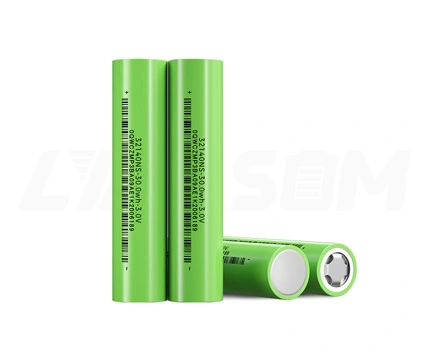
We manufacture the core technology. Lyrasom produces high-performance 32140 and 40140 LiFePO4 cells, alongside cutting-edge Sodium-Ion cells, ensuring total quality control over safety, cycle life, and thermal stability before the battery is even assembled.
Strong R&D Capabilities
Through deep academic partnerships with Nanjing University and Central South University, we operate dedicated Doctoral Workstations and National-Level R&D Centers, keeping our products at the forefront of global battery innovation.
International Quality Standards & Global Reach
All Lyrasom products carry vital certifications, including UL, CE, and BIS. With an established footprint serving customers in over 70+ countries (including the USA, Germany, Japan, and India), we understand global compliance and deliver reliable supply chains.
Explore Lyrasom Product Portfolio
| Product Category | Typical Application |
| LFP and Sodium Ion Cells | Battery Pack Manufacturing & Integration |
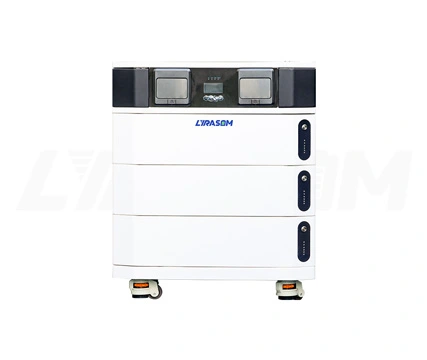
| Residential Energy Storage Battery | Home Solar Storage (Wall Mounted & Stacked) |
| Industrial & Commercial ESS | Peak Shaving, Microgrids & Backup Power (Rack Mount) |
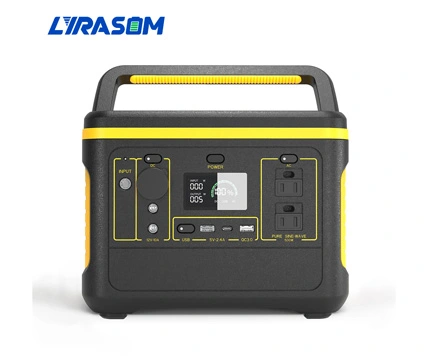
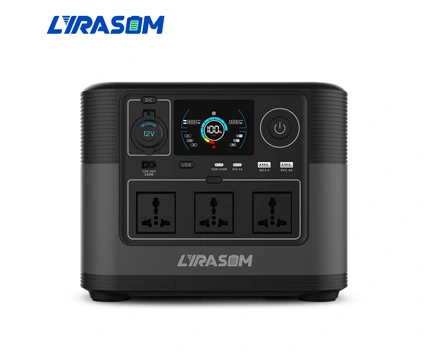
| Portable Power Station | Mobile Energy Storage & Off-Grid Use |
Frequently Asked Questions
Is a wall mounted battery better than a rack mount battery?
It entirely depends on the application. Wall-mounted batteries are better for residential use due to their space-saving design and aesthetics. Rack-mount batteries are better for commercial use due to their massive capacity and scalability.
Are rack mount batteries more scalable?
Yes. Rack systems are specifically designed for modular expansion. You can easily slide additional battery modules into the cabinet and wire them in parallel as your energy needs grow.
Which battery type is better for solar energy storage?
For residential solar systems (typically 5-20kWh), wall-mounted batteries are overwhelmingly preferred. For commercial solar farms or industrial roofs, rack-mount batteries are the superior option.
Can LiFePO4 batteries be used in both wall mounted and rack mounted systems?
Yes. LiFePO4 (Lithium Iron Phosphate) is currently the dominant and safest battery chemistry utilized across both residential wall units and commercial rack configurations.