English


What Is a Wall Mounted Energy Storage Battery?
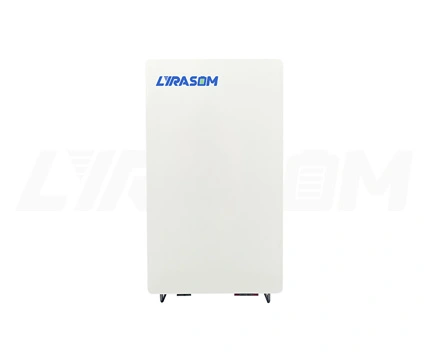
A wall-mounted energy storage battery is a compact, highly integrated power storage unit designed to be securely fastened to a vertical surface, such as a garage or utility room wall. Unlike bulky, traditional floor-standing battery banks, these sleek units are engineered specifically for modern residential and light commercial environments. At its core, a wall-mounted battery features advanced energy cells managed by an intelligent Battery Management System (BMS). It pairs seamlessly with hybrid or off-grid solar inverters to capture and store direct current (DC) electricity generated by solar panels. The internal BMS continuously monitors cell health, voltage, and temperature, ensuring maximum safety and optimal performance.
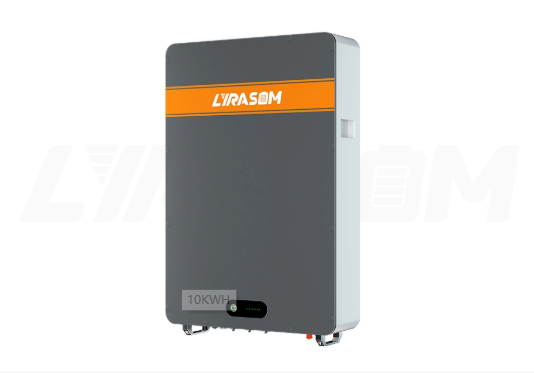
Mainstream Battery Chemistries in the Market
Not all wall-mounted batteries are created equal. The underlying chemical composition dictates the system's lifespan, safety, and efficiency. Currently, the market is undergoing a significant transition in battery technology:
| Battery Type | Primary Application & Status |
| LiFePO4 (LFP) Battery | The dominant standard for Residential ESS due to superior safety and longevity. |
| Sodium-ion Battery | A rapidly emerging ESS technology offering lower costs and excellent cold-weather performance. |
| Lead Acid Battery | Traditional backup solution, currently being phased out due to short lifespan and toxic materials. |
Conclusion: The industry consensus is clear. Advanced LiFePO4 and emerging Sodium-ion technologies are rapidly replacing outdated lead-acid systems, offering consumers vastly improved reliability, safety, and return on investment.
Why Are Wall Mounted Energy Storage Batteries Becoming So Popular?
The dramatic surge in popularity of wall mounted battery storage is not merely a design trend; it is a response to shifting global energy dynamics. As international markets push for carbon neutrality, distributed solar energy has become widely accessible. However, generating solar power is only half the battle. Several critical market trends are driving homeowners to adopt energy storage:
Soaring Electricity Prices: Traditional grid electricity costs are increasing year over year, pushing consumers to seek self-sufficient alternatives.
Grid Instability: Extreme weather events and aging infrastructure have led to more frequent power outages, making grid independence highly desirable.
Declining Feed-in Tariffs: Utilities are paying less for excess solar power sent back to the grid, incentivizing homeowners to store and consume their own power.
Aesthetic Demands: Modern homeowners demand equipment that looks as good as it performs, favoring sleek wall-mounted designs over industrial-looking battery racks.
Top 10 Advantages of Wall Mounted Energy Storage Battery
Integrating a battery into a photovoltaic system fundamentally changes how a household interacts with energy. Here are the top ten reasons why wall-mounted systems are the preferred choice for residential solar applications.
1. Maximize Solar Self-Consumption
Solar panels generate the most power during midday when household energy demand is typically at its lowest. Without solar battery storage, this excess energy is fed back into the grid, often at a low financial return. A wall-mounted battery, also known as a battery wall mount solution, captures this surplus power, storing it safely so your home can run on pure solar energy after the sun goes down. This practice drastically improves your solar self-consumption rate, ensuring you extract the maximum possible value from your solar panels.
2. Lower Electricity Bills
By utilizing a strategy known as "peak shaving and valley filling," smart wall-mounted batteries can draw from the grid during off-peak hours when electricity is cheap, and discharge to power your home during peak evening hours when utility rates are highest. This strategic energy management drastically reduces reliance on expensive grid power, rapidly increasing the Return on Investment (ROI) of your solar system.
| Without Battery | With Wall Mounted Battery |
| High Grid Usage during peak evening hours | Significantly Reduced Grid Usage |
| Higher Monthly Electricity Bills | Lower Monthly Bills & Faster System Payback |
3. Reliable Backup Power During Outages
Grid failures and blackouts can happen without warning. A wall-mounted energy storage battery acts as a silent, immediate generator alternative. When the grid goes down, the system switches to backup mode in milliseconds, seamlessly keeping your critical appliances—such as lights, Wi-Fi routers, refrigerators, and security systems—running without interruption.
4. Space-Saving Wall Mounted Design
Floor space is a premium in most modern homes and garages. Unlike bulky server-rack batteries that require dedicated cabinets and occupy significant floor space, wall-mounted batteries utilize unused vertical space. This is why many household energy storage system manufacturers prioritize wall-mounted designs for residential storage applications. Their ultra-thin, aesthetically pleasing profile blends seamlessly with modern home architecture.
| Feature | Wall Mounted Battery | Rack Mounted Battery |
| Space Utilization | Uses vertical wall space | Consumes valuable floor space |
| Physical Footprint | Highly Compact | Larger, industrial footprint |
5. Easy Installation and Maintenance
For EPCs (Engineering, Procurement, and Construction) and solar installers, time is money. Wall-mounted batteries are built with an all-in-one, plug-and-play architecture. The internal components are pre-wired, and the mounting brackets allow for swift, secure installation by a single technician or a small team, vastly reducing labor costs and minimizing on-site errors.
6. Enhanced Safety with LiFePO4 Technology
Safety is the number one priority for residential energy systems. High-quality wall-mounted batteries utilize Lithium Iron Phosphate (LiFePO4) chemistry. Unlike older lithium-ion variants (like NMC), LiFePO4 is incredibly stable. It boasts excellent thermal stability, meaning it is highly resistant to overheating and completely eliminates the risk of thermal runaway or fire. Furthermore, it is non-toxic, containing no heavy metals like cobalt or lead.
| Feature | LiFePO4 Battery | Lead Acid Battery |
| Safety Level | Excellent (No fire risk) | Moderate (Risk of acid leaks/gas) |
| Cycle Life | 6000+ Cycles | 500 - 1000 Cycles |
| Maintenance | Zero (Low Maintenance) | High (Requires regular checks) |
7. Long Cycle Life and High ROI
Modern wall-mounted LiFePO4 batteries are engineered for longevity, typically offering upwards of 6,000 charge and discharge cycles. To put this in perspective: if a household fully cycles the battery once a day, 6,000 cycles translates to a lifespan of over 15 years. This incredible durability ensures that the initial capital expenditure is spread out over decades, resulting in an exceptionally high return on investment.
8. Smart Monitoring and Energy Management
Gone are the days of guessing your battery's health. Wall-mounted systems come equipped with Wi-Fi or Bluetooth connectivity, allowing users to monitor their energy system in real-time via smartphone apps. Users can view precise data on State of Charge (SOC), battery voltage, discharge current, and live solar generation, empowering them to make smart decisions about their energy usage.
9. Modular Expansion Capability
Energy needs change over time. Perhaps you buy an electric vehicle or add an extension to your home. Wall-mounted batteries are highly modular, supporting multiple units connected in parallel. This scalability ensures that the system is perfect for small apartments, expanding villas, or even growing small businesses.
| Household Size | Suggested Battery Capacity |
| Small Home (1-2 Bedrooms) | 5kWh - 10kWh |
| Medium Home (3-4 Bedrooms) | 10kWh - 20kWh |
| Large Home / Villa (5+ Bedrooms) | 20kWh - 30kWh+ |
10. Environmentally Friendly Energy Storage
By maximizing the use of renewable solar energy and minimizing reliance on fossil-fuel-powered utility grids, wall-mounted energy storage actively reduces your household carbon footprint. Furthermore, modern lithium and sodium-ion batteries are much cleaner to manufacture and recycle than legacy lead-acid batteries, strongly supporting global green energy transitions.
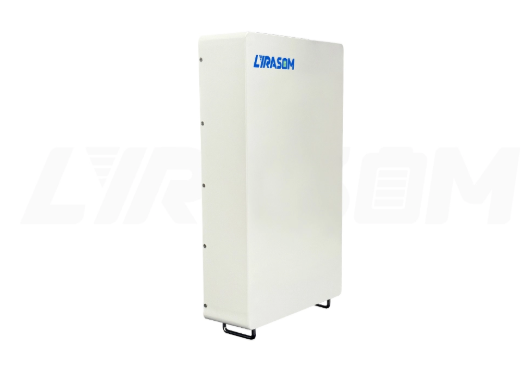
Wall Mounted vs Rack Mounted Energy Storage Battery
When planning a solar project, buyers often weigh wall-mounted systems against traditional rack-mounted units. While both store energy efficiently, their form factors dictate their best use cases.
| Feature | Wall Mounted Battery | Rack Mounted Battery |
| Installation | Easy & Fast (Wall bracket) | Moderate (Requires server cabinet) |
| Footprint | Small (Zero floor space) | Larger (Floor-standing cabinet) |
| Typical Capacity | Small to Medium (5-30kWh) | Medium to Large (20-100kWh+) |
| Residential Use | Excellent (Aesthetic, compact) | Good (If a utility room is available) |
| Commercial Use | Limited | Excellent (High scalability) |
| Scalability | Moderate (Up to 15-16 units) | High (Can stack multiple huge racks) |
Conclusion: For residential homes and villas, wall-mounted batteries are overwhelmingly the priority due to their aesthetics and space-saving design. For industrial and large commercial projects requiring massive energy reserves, rack-mounted solutions remain the standard.
Best Applications for Wall Mounted Energy Storage Batteries
Residential Solar Systems
The quintessential use case. Wall-mounted batteries integrate perfectly with home rooftop solar arrays, capturing excess daytime energy to power household appliances like HVAC systems, lighting, and EVs during the night.
Off-Grid Solar Systems
For remote cabins, farms, or homes disconnected from the public grid, these batteries act as the central energy lifeline. They store enough PV-generated electricity to guarantee steady power through the night and during cloudy weather.
Hybrid Solar Systems
In hybrid setups, the battery interacts with both the solar panels and the public grid. It intelligently manages flows—storing solar energy, charging from the grid during cheap off-peak hours, and providing seamless backup if the grid fails.
Small Commercial Energy Storage
Small businesses cannot afford downtime. Wall-mounted units are increasingly installed in boutique shops, offices, and medical clinics to ensure that servers, point-of-sale systems, and essential medical equipment continue to run smoothly regardless of grid fluctuations.
Why LiFePO4 Batteries Are the Best Choice for Wall Mounted Energy Storage
Among all lithium-ion variants, Lithium Iron Phosphate (LiFePO4) stands out as the ultimate chemistry for wall-mounted applications. In particular, lfp 32140 cells can support compact, safe, and long-life battery module designs for residential wall-mounted energy storage. It brings together an uncompromising blend of safety, longevity, and efficiency that is unmatched by NMC (Nickel Manganese Cobalt) or lead-acid alternatives. The core advantage lies in its thermal stability. LiFePO4 cells can withstand high temperatures and abusive conditions without igniting. Furthermore, they provide high efficiency (routinely exceeding 95% round-trip efficiency), meaning very little energy is lost as heat during the charging and discharging processes.
| Performance Parameter | LiFePO4 Standard |
| Cycle Life | 6000+ Cycles (15+ Years) |
| Energy Efficiency | > 95% |
| Depth of Discharge (DoD) | Up to 95% without damage |
| Safety / Fire Risk | Excellent (No Thermal Runaway) |
The Future of Wall Mounted Energy Storage: Sodium-Ion Batteries
While LiFePO4 is the current king, the energy storage landscape is rapidly evolving. The next major breakthrough entering the wall-mounted market is the Sodium-ion battery. Because sodium is thousands of times more abundant than lithium and evenly distributed across the globe, sodium-ion technology completely removes the industry's dependency on expensive and scarce lithium mining. Beyond lower raw material costs, sodium-ion batteries exhibit extraordinary resilience in extreme cold, maintaining high discharge rates even at sub-zero temperatures where traditional lithium batteries falter. Additionally, they can be completely discharged to zero volts for completely safe, zero-risk transportation.
| Feature | LiFePO4 | Sodium-ion |
| Raw Material Cost | Medium | Lower Potential |
| Safety | Excellent | Excellent (Can transport at 0V) |
| Low Temp Performance | Good | Significantly Better |
| Market Maturity | Highly Mature | Emerging & Fast Growing |
Future Outlook: The future of residential energy storage is dual-tracked. LiFePO4 will remain the mainstream premium standard, while Sodium-ion will experience explosive growth, particularly in cost-sensitive markets and cold-climate regions.
Why Choose Lyrasom for Energy Storage Solutions?
In an industry flooded with assemblers, Lyrasom Energy stands apart as a deeply integrated manufacturer. We don't just put batteries in boxes; we engineer the core power technology from the ground up.
Advanced Battery Cell Manufacturing
Lyrasom Energy specializes in the sophisticated manufacturing of high-performance battery cells, giving us total quality control over our end products. Our core cell production includes:
High-capacity 32140 and 40140 LiFePO4 cells.
Cutting-edge Sodium-ion battery cells for next-generation storage.
Strong R&D Capability and Academic Partnerships
Innovation drives Lyrasom. We have established dedicated Doctoral Workstations and R&D Centers in direct collaboration with prestigious institutions, including Nanjing University and Central South University. This ensures our technology remains at the forefront of the global energy transition.
Certified Quality and Global Market Experience
All Lyrasom energy storage systems undergo rigorous safety and performance testing to meet strict international standards, proudly carrying UL, CE, and BIS certifications. With a robust export network, Lyrasom has delivered reliable power solutions to over 70+ countries, with a strong market presence in the USA, Germany, Japan, and India.
Complete Energy Storage Product Portfolio
| Product Category | Primary Application |
| LFP and Sodium Ion Cells | Battery Pack Manufacturing & Integration |
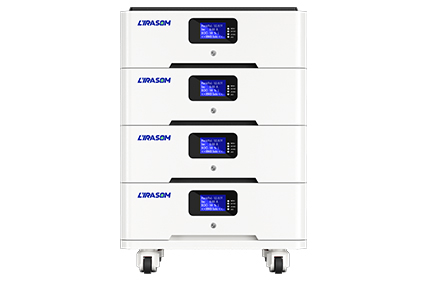
| Residential Energy Storage Battery | Home Solar Storage (Wall Mounted & Stackable) |
| Industrial & Commercial ESS | Peak Shaving, Grid Backup & Microgrids |
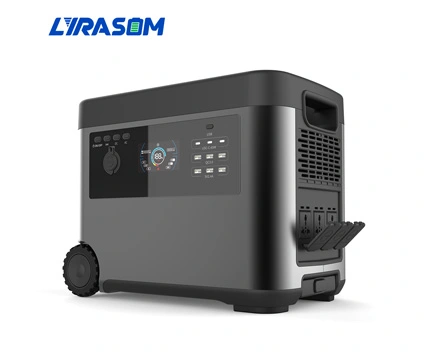
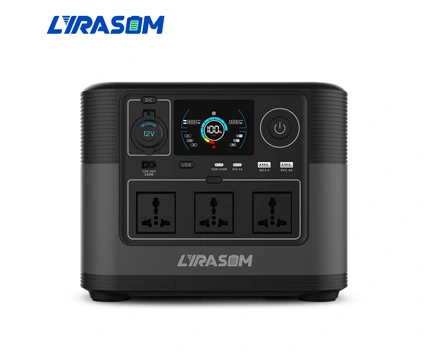
| Portable Power Station | Mobile Energy Storage & Outdoor Power |
FAQs About Wall Mounted Energy Storage Batteries
How long does a wall mounted energy storage battery last?
High-quality LiFePO4 wall-mounted batteries are built to last between 10 to 15 years. They typically provide 6,000+ deep charge and discharge cycles before degrading to 80% of their original capacity.
Is a wall mounted battery safe?
Yes, they are incredibly safe. The industry standard utilizes LiFePO4 (Lithium Iron Phosphate) chemistry, which is universally recognized as the safest lithium battery technology available, presenting no risk of thermal runaway or fire.
Can a wall mounted battery power a whole house?
Absolutely, provided the system is sized correctly. A standard home requires anywhere from 5kWh to 30kWh of capacity depending on energy loads (like AC units and EVs). Wall-mounted units can be connected in parallel to achieve the necessary capacity to back up an entire house.
What size wall mounted battery do I need?
For a small 1-2 bedroom home, a 5-10kWh battery is usually sufficient. Medium homes typically require 10-20kWh, while large villas or homes with heavy electrical loads may require a scalable system of 20-30kWh or more.