Search


As the global drive toward renewable energy and grid decentralization intensifies, Battery Energy Storage Systems (BESS) have emerged as the foundational infrastructure for modern power management. Effectively sourcing, stabilizing, and optimizing energy usage requires a deep understanding of the electrochemical technologies available. While there are numerous experimental chemistries, the industry has largely converged on three primary categories: Lithium-ion (specifically LiFePO4), Flow Batteries, and Lead-Acid (increasingly being replaced by Sodium-ion). Each technology offers distinct advantages in energy density, cycle life, and scalability.
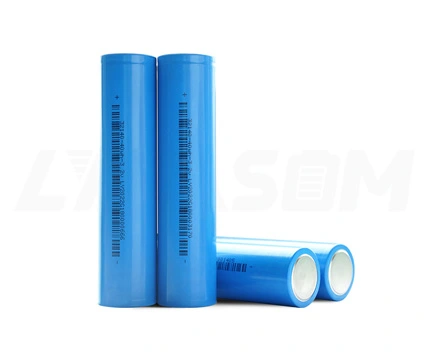
Lithium-ion batteries are currently the most dominant BESS technology, favored for their high energy density and exceptional round-trip efficiency (often exceeding 90%). Within this category, Lithium Iron Phosphate (LiFePO4 or LFP) has become the preferred choice for stationary storage due to its superior safety profile and thermal stability compared to Cobalt-based chemistries.Lyrasom Energy specializes in high-capacity LFP cylindrical cells, such as the 32140 and 40140 series, which are specifically engineered for BESS integration. These cells utilize a full-tab (tabless) structure, a critical innovation that reduces internal resistance and facilitates rapid charging and discharging. This architectural advantage is vital for BESS applications like “frequency regulation,” where the battery must respond to grid fluctuations in milliseconds. With a cycle life ranging from 3,000 to over 6,000 cycles, Lithium-ion BESS is the ideal solution for residential storage, electric vehicle charging infrastructure, and commercial peak-shaving.
Flow batteries, most notably Vanadium Redox Flow Batteries (VRFB), represent a fundamentally different approach to energy storage. Unlike solid-state batteries where energy is stored in the electrodes, flow batteries store energy in liquid electrolytes contained in external tanks. These liquids are pumped through a central stack where a chemical reaction occurs to generate electricity.The primary advantage of a Flow BESS is its independent scalability of power and energy. To increase the power output, one simply increases the size of the electrode stack; to increase the energy capacity (duration), one simply increases the size of the electrolyte tanks. This makes flow batteries exceptionally well-suited for long-duration storage (4 to 12+ hours) and large-scale utility projects. Furthermore, flow batteries experience almost zero degradation over tens of thousands of cycles, though they suffer from lower energy density and higher system complexity compared to the compact cylindrical cell solutions provided by Lyrasom Energy.
Lead-acid batteries are the most mature BESS technology, having been used for decades in uninterruptible power supplies (UPS) and telecommunications backup. They are valued for their low initial capital expenditure and high reliability. However, they are increasingly being marginalized in modern renewable projects due to their short cycle life (typically 300–500 cycles) and high maintenance requirements.In response to the limitations of lead-acid, the industry—and specifically innovators like Lyrasom Energy—is pivoting toward Sodium-ion (Na-ion) technology. Sodium-ion batteries offer a “middle ground” that combines the cost-effectiveness of lead-acid with the performance of lithium-ion. Sodium is abundant and inexpensive, and Na-ion batteries perform exceptionally well in extreme cold, a known weakness for both lead-acid and lithium. For industrial applications where cost and environmental sustainability are the primary drivers, Sodium-ion BESS is positioned to become the third major pillar of the energy storage market.
When selecting a BESS type, engineers and project managers typically evaluate systems based on the following metrics:
Energy Density: Lithium-ion (High) > Sodium-ion (Medium) > Flow/Lead-Acid (Low).
Cycle Life: Flow Batteries (Extreme) > Lithium-ion/Sodium-ion (High) > Lead-Acid (Low).
Response Time: Lithium-ion/Sodium-ion (Instantaneous) > Flow Batteries (Rapid) > Lead-Acid (Moderate).
Maintenance: Lithium-ion/Sodium-ion (Minimal/Integrated BMS) > Lead-Acid (High) > Flow Batteries (Moderate due to pumps/plumbing).
Lyrasom Energy’s focus on high-capacity LFP and Sodium-ion cylindrical cells aligns with the market’s demand for systems that are compact, fire-safe, and capable of lasting over a decade without significant capacity loss.
The right BESS type depends entirely on the “duty cycle” of the application. For a homeowner looking to store solar energy for overnight use, a Lithium-ion (LFP) system is almost always the best choice due to its high efficiency and space-saving design. For a utility company looking to provide 10 hours of grid backup, a Flow Battery may offer a lower total cost over 20 years.However, for most commercial and industrial (C&I) applications—such as factory peak-shaving or hospital backup—the versatility of Lyrasom Energy’s 32140 and 40140 cells provides the most balanced ROI. These cells allow for modular “stackable” designs that can be scaled as energy needs grow, ensuring that the energy infrastructure remains as flexible as the business it supports.
Q1: Why is LiFePO4 (LFP) preferred over other Lithium-ion types for BESS?
LFP chemistry is much more thermally stable and does not contain cobalt, which is expensive and ethically sourced. LFP cells, especially in the 32140 format, offer a longer cycle life and are significantly less prone to fire, making them safer for indoor residential and commercial installations.
Q2: How does Sodium-ion compare to Lithium-ion in a BESS setup?
Sodium-ion batteries are more cost-effective and perform better in sub-zero temperatures. While they have slightly lower energy density than Lithium-ion, they use more abundant raw materials, making them a highly sustainable choice for large-scale industrial storage.
Q3: What is the significance of the 32140 and 40140 cell sizes in BESS?
These large-format cylindrical cells allow for higher capacity per cell (up to 15Ah for 32140). This reduces the total number of cells needed in a BESS pack, simplifying the Battery Management System (BMS) and reducing the number of weld points, which increases overall system reliability.
Q4: Can different BESS types be used together?
Yes, this is known as a “Hybrid BESS.” For example, a facility might use Lithium-ion for rapid response and frequency regulation, while using a Flow Battery or Sodium-ion system for long-duration energy discharge during extended outages.

 English