Search


As electricity costs continue to rise and grid reliability becomes increasingly important, more businesses are investing in energy storage solutions to reduce demand charges, improve energy efficiency, and maintain power availability during outages. However, selecting the right storage capacity is one of the most important decisions when planning an energy storage project.
A properly sized commercial battery storage system must match the company’s energy consumption patterns, peak demand requirements, backup power expectations, and future expansion plans. An oversized system may increase unnecessary investment costs, while an undersized system may fail to deliver the expected economic and operational benefits.
Understanding how to size commercial battery storage systems requires evaluating several key factors, including energy capacity (kWh), power rating (kW), load profile, peak demand, and backup duration.
This guide explains the main considerations for designing a commercial BESS, including how to calculate storage capacity, determine power requirements, and select the right commercial storage system for business applications.
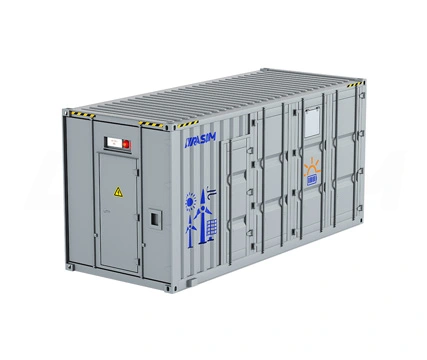
A commercial battery storage system is an energy storage solution designed for businesses, industrial facilities, commercial buildings, and large-scale organizations. Unlike residential battery systems, commercial systems are designed to handle higher energy consumption, larger loads, and more complex energy management requirements.
A typical commercial battery storage system includes battery modules, battery management systems (BMS), power conversion systems (PCS), energy management systems (EMS), and safety protection components.
These systems store electricity when energy prices are lower or when renewable energy production is high, then release stored power when demand increases or grid power becomes unavailable.
The main applications of business energy storage include:
Reducing electricity demand charges through peak shaving.
Providing backup power during grid outages.
Increasing solar energy utilization.
Improving energy management efficiency.
Supporting grid flexibility and renewable integration.
The correct system size depends on the specific purpose of the installation and the operating conditions of the facility.
Before calculating the required size of a commercial storage system, businesses must first define the primary objective. Different applications require different battery capacities and power ratings.
For peak shaving, the goal is usually to reduce electricity consumption during expensive peak demand periods. The battery does not necessarily need to power the entire facility but only needs to provide enough energy to reduce grid demand.
For backup power, the system must provide electricity for critical loads during outages. In this case, the required capacity depends on how long backup power is needed and which equipment must remain operational.
Solar storage applications focus on storing excess solar energy generated during the day and using it later when solar production decreases.
The purpose of the system directly affects design decisions:
| Application | Main Requirement | Sizing Priority |
|---|---|---|
| Peak Shaving | Reduce demand charges | Power rating and short-duration capacity |
| Backup Power | Maintain critical operations | Energy capacity and backup duration |
| Solar Storage | Increase renewable usage | Daily energy storage capacity |
A well-designed commercial BESS should be optimized according to the actual business objective rather than simply maximizing battery capacity.
One of the most common mistakes when sizing a commercial battery storage system is confusing power capacity and energy capacity.
Energy capacity is measured in kilowatt-hours (kWh) and represents how much electricity the battery can store. Power rating is measured in kilowatts (kW) and represents how much electricity the battery can deliver at a specific moment.
For example, a battery system with 500 kWh capacity can store a certain amount of energy, but its ability to operate large equipment depends on whether it has sufficient kW output.
A facility with high short-term power demand may require a higher power rating, while a facility needing long backup operation may require greater energy capacity.
Both values must be considered together when designing commercial battery storage systems.
The required energy capacity of a commercial battery storage system depends on how much electricity needs to be stored and for how long it must be supplied.
A basic calculation method is:
Required Battery Capacity (kWh) = Load Power (kW) × Operating Time (hours)
For example, if a business needs 100 kW of backup power for 5 hours, the required energy capacity would be approximately:
100 kW × 5 hours = 500 kWh
However, the actual battery size must include additional considerations such as usable depth of discharge, system efficiency, and future capacity requirements.
A battery should not normally operate at 100% discharge because maintaining a safety margin helps improve battery lifespan.
Therefore, the final capacity of a commercial storage system is usually larger than the basic calculated energy requirement.
While energy capacity determines how long the battery can operate, the power rating determines how much load the battery can support at one time.
The required power rating of a commercial BESS depends on the maximum power demand that the system needs to handle.
For peak shaving applications, the power rating should match the amount of demand reduction required. For example, if a facility wants to reduce peak demand by 300 kW, the battery inverter should be capable of delivering approximately 300 kW.
For backup applications, the power rating must be high enough to support critical equipment, including motors, HVAC systems, production equipment, and emergency systems.
Selecting insufficient power capacity may result in battery overload even if the total energy capacity is adequate.
A facility’s load profile is one of the most important factors when sizing commercial battery storage systems.
Electricity usage is rarely constant throughout the day. Many commercial buildings experience demand spikes during specific operating hours, while energy consumption decreases during other periods.
By analyzing historical electricity data, businesses can identify:
Daily peak demand periods.
Average energy consumption.
Critical equipment loads.
Seasonal demand changes.
For peak shaving projects, the battery is usually sized according to the highest demand periods rather than average consumption.
A detailed load profile allows engineers to avoid unnecessary battery investment while ensuring the system provides the expected financial benefits.
Backup power sizing requires determining which loads must continue operating during an outage and how long they need electricity.
A complete backup calculation should consider:
Critical load power requirements.
Required backup duration.
Battery efficiency losses.
Safety capacity margin.
For example, a facility may not need to power every electrical device during an outage. Instead, it may only support essential systems such as security equipment, communication systems, emergency lighting, and selected production processes.
By focusing on critical loads, businesses can reduce the required size of the commercial battery storage system while still maintaining operational continuity.
The rated capacity of a battery is not always equal to the actual usable energy available. Several factors influence the effective capacity of a business energy storage system.
Battery temperature, depth of discharge, charging efficiency, and system losses all affect real-world performance.
For example, a battery rated at 1,000 kWh may provide less usable energy depending on operating conditions and protection settings.
Other important factors include battery degradation over time and future performance requirements.
Considering these factors during system sizing helps ensure the storage solution continues meeting business needs throughout its service life.
Consider a commercial facility that wants to reduce peak demand and provide limited backup power.
The facility has:
Peak demand reduction target: 250 kW.
Required backup duration: 4 hours.
Average critical load: 150 kW.
For peak shaving, the battery requires at least 250 kW power output.
For backup operation:
150 kW × 4 hours = 600 kWh
After considering efficiency losses and capacity reserve, the final system may require a larger capacity than the basic calculation.
This example shows why both power and energy capacity must be considered when selecting a commercial storage system.
Choosing the right commercial battery storage solution requires evaluating both technical and business requirements.
Important considerations include:
Define the main application goal: peak shaving, backup power, or solar storage.
Analyze historical energy consumption data.
Calculate required kWh capacity.
Determine required kW power output.
Consider future expansion requirements.
Evaluate battery lifespan and efficiency.
Confirm system safety features and monitoring capabilities.
A properly designed commercial BESS can help businesses reduce energy costs, improve reliability, and optimize electricity usage.

 English