Search


Stacked lithium batteries provide a modular and scalable energy storage solution that allows users to increase capacity gradually while maintaining high efficiency, safety, and space utilization. This makes them an excellent choice for residential energy storage battery and commercial battery storage system needs
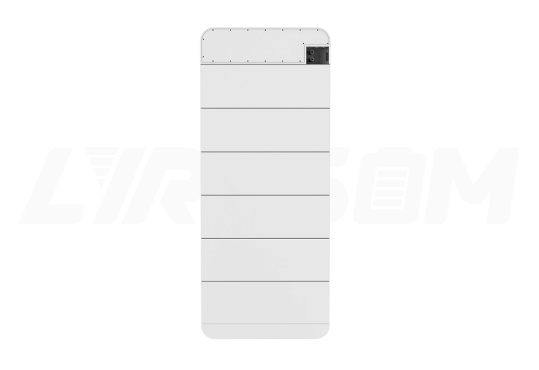
A stacked lithium battery system, also known as a stackable lithium battery or modular battery storage system, consists of multiple individual battery modules that are vertically stacked to form a complete, high-capacity energy storage unit. This vertical design maximizes energy density while minimizing the physical footprint.Core components typically include:
Individual Battery Modules built with 32140 cells and usually LiFePO4 chemistry
Integrated Battery Management System (BMS)
Communication Module for system monitoring
Hybrid Inverter (in all-in-one configurations)
Energy Management System (EMS) for intelligent control
Energy is gathered from primary sources such as rooftop solar panels, the utility grid during off-peak hours, or supplementary wind turbines in hybrid installations.
Excess electricity charges the stacked battery modules efficiently, with stacked battery technology and the BMS ensuring balanced charging across all cells.
The advanced BMS continuously monitors voltage, temperature, and performs active cell balancing. This real-time oversight protects the system and maximizes lifespan.
When demand arises or during grid outages, stored power is converted from DC to AC and intelligently distributed to various loads through the integrated inverter and EMS.
One of the greatest advantages of stacked lithium batteries is their ability to grow with your needs. Start with a 10kWh base system and easily expand to 20kWh or 30kWh by adding modules without replacing the entire unit. This scalability is particularly valuable for residential users whose energy consumption may increase over time due to EV charging or home expansions.
Stacking allows for substantial total capacity in a compact form.
| Number of Modules | Typical Capacity |
| 2 Modules | 10kWh |
| 4 Modules | 20kWh |
| 6 Modules | 30kWh |
The vertical stacking design dramatically reduces floor space requirements compared to wall-mounted or traditional rack systems, making it perfect for garages, utility rooms, or tight commercial spaces.
Individual modules are lighter and more manageable to transport. On-site assembly is straightforward, often requiring minimal technical expertise and significantly shorter installation times.
Should an issue arise, only the affected module needs replacement. This minimizes downtime and reduces long-term service costs compared to monolithic battery systems.
Modular isolation limits the impact of any potential cell failure. Combined with LiFePO4 chemistry, stacked systems offer excellent thermal stability and reduced risk of thermal runaway.
Users can purchase only the capacity they currently need and expand later, avoiding large upfront capital expenditure while still benefiting from premium technology.
As energy demands evolve with new appliances, electric vehicles, or business growth, the system can seamlessly scale without major overhauls.
| Feature | Stacked Battery | Wall Mounted | Rack Mounted |
| Scalability | Excellent | Moderate | Excellent |
| Installation | Easy | Easy | Professional |
| Space Efficiency | Excellent | Excellent | Good |
| Maintenance | Easy | Moderate | Easy |
| Upgrade Flexibility | Excellent | Limited | Good |
LiFePO4 (Lithium Iron Phosphate) has become the gold standard for stacked lithium batteries due to its outstanding performance characteristics. Battery modules built with 32140 LFP cells can further support high safety, long cycle life, and stable performance in stacked energy storage systems.
Long Cycle Life: Typically exceeding 6000 cycles with minimal capacity fade, ensuring decades of reliable service.
High Safety: Superior thermal stability and resistance to overheating or combustion.
Low Maintenance: No need for regular watering or complex upkeep.
High Efficiency: Round-trip efficiency often above 95%, maximizing usable energy.
| Feature | Stacked Battery | Wall Mounted | Rack Mounted |
| Scalability | Excellent | Moderate | Excellent |
| Installation | Easy | Easy | Professional |
| Space Efficiency | Excellent | Excellent | Good |
| Maintenance | Easy | Moderate | Easy |
| Upgrade Flexibility | Excellent | Limited | Good |
Home Backup Power: Provide seamless power during outages for critical appliances.
Solar Energy Storage: Maximize self-consumption and reduce grid dependency.
Off-Grid Homes: Enable complete energy independence in remote locations.
| Industry | Typical Application |
| Commercial Buildings | Peak Shaving |
| Telecom | Backup Power |
| Solar Projects | Energy Storage |
| Microgrids | Load Balancing |
Assess your current and projected daily energy consumption to determine the starting capacity.
Choose systems with proven modular compatibility for easy future upgrades.
Prioritize LiFePO4 for safety and longevity in stacked configurations.
Look for comprehensive warranties (typically 10 years) and certifications like CE, UL, or IEC.

 English