Search


In the burgeoning landscape of battery technology, LiFePO4 32140 batteries stand out as a crucial component, particularly in the realm of efficient energy storage. The increasing demand for sustainable energy solutions and advanced battery systems prompts businesses and consumers alike to explore the specifications, applications, and performance of these large-format cylindrical cells. This guide delves into the intricacies of the LiFePO4 32140 size, discussing its characteristics, use cases, and how it compares to other battery sizes while tying in insights from Lyrasom Energy, a leader in innovative battery solutions.
LiFePO4, or Lithium Iron Phosphate, has emerged as a preferred choice in modern battery applications due to its superior safety and stability. When we refer to the size specification of 32140, we are distinguishing not only the dimensions but also the overall design philosophy behind these cylindrical cells.The numerical designation “32140” follows a standard industry naming convention for cylindrical batteries:
32: Represents the diameter of the cell in millimeters (32mm).
140: Denotes the height of the cell in millimeters (140mm).
In the context of battery technologies, such precise measurements are critical for compatibility and thermal management. A well-structured cell like the LiFePO4 32140 features a full-tab (tabless) configuration, which significantly enhances safety through improved current distribution and lower internal resistance. This design contributes to achieving remarkable energy density and reduced charging time, essential for both residential and industrial applications.At Lyrasom Energy, our commitment to innovation ensures that we leverage the strengths of LiFePO4 chemistry to manufacture high-capacity cells that fit into various energy architectures. From small-scale domestic storage solutions to robust commercial applications, understanding these physical dimensions is the first step in choosing the right product for your energy needs.
The LiFePO4 32140 battery’s dimensions make it exceptionally versatile. Its cylindrical configuration provides excellent structural integrity and superior heat dissipation capabilities compared to prismatic or pouch cells, which is essential for maintaining optimal performance during prolonged high-current use.
Unlike smaller cells, the 32140 form factor allows for significantly higher capacities. Lyrasom Energy offers a range of 32140 cells including:
32140 3.2V 10000mAh (10Ah)
32140 3.2V 12500mAh (12.5Ah)
32140 3.2V 15000mAh (15Ah)
These high capacities support demanding power requirements without needing a massive number of cells in parallel, simplifying the Battery Management System (BMS) and pack assembly.
The 32140 lithium battery ensures an industry-leading cycle life, typically exceeding 2,000 to 4,000 charge-discharge cycles depending on usage conditions. This longevity, combined with inherent chemical stability, positions it as a reliable choice for long-term investments. Advanced safety features, including thermal runaway protection and the robust full-tab design, contribute to drastically reduced risks of overheating compared to traditional ternary lithium-ion batteries.
The adaptability of the LiFePO4 32140 battery extends across multiple high-growth domains. As the world shifts toward electrification, these cells provide the backbone for various systems:
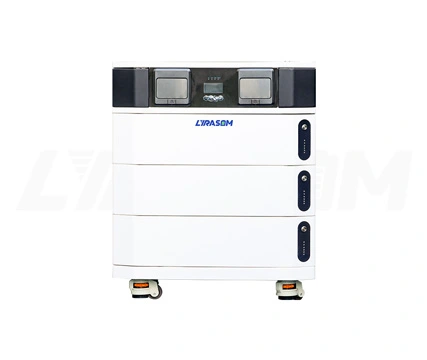
In residential setups, these batteries are used to power home appliances and provide critical backup power during grid outages. Lyrasom Energy’s solutions utilize these cells in wall-mounted and stackable systems that optimize home space while ensuring maximum energy efficiency and safety for families.
In industrial settings, the high discharge capacity of 32140 batteries is invaluable. They serve as reliable power sources for heavy machinery, automated guided vehicles (AGVs), and support Uninterruptible Power Supply (UPS) systems in data centers and critical medical facilities.
Integrating these batteries with renewable sources—such as solar and wind power—further enhances their value. By storing excess energy generated during the day, the LiFePO4 32140 enables a steady, reliable energy supply 24/7, making green energy more practical and cost-effective.
When evaluating the LiFePO4 32140 against more common battery sizes like the 18650 or 21700, the differences in scale and performance become clear:
Energy Management: While 18650 batteries are popular for compact consumer electronics (like laptops), the 32140’s much larger volume allows for up to 5x the capacity of a standard 18650. This means fewer cells are required to build a high-voltage pack, reducing the complexity of the wiring and the BMS.
Thermal Efficiency: The larger surface area and the full-tab design of the 32140 allow for better cooling. This makes them far superior for high-power applications where smaller cells might struggle with heat accumulation.
Cost-Effectiveness: For large-scale projects, using 32140 cells can reduce the “cost per watt-hour” during the manufacturing process because there are fewer individual cells to weld, test, and monitor compared to packs built with 21700 cells.
Lyrasom Energy’s 32140 range caters specifically to markets that require this higher energy density without compromising on the safety standards inherent to the LiFePO4 chemistry.
Understanding the performance of LiFePO4 32140 batteries is essential for assessing their suitability for specific engineering projects. Key metrics include:
Energy Density: Typically ranging around 140-160 Wh/kg, these cells strike a perfect balance between weight and power.
Thermal Stability: The LFP chemistry has a much higher thermal runaway temperature than NCM cells, making them virtually fire-safe in most operating environments.
Low Self-Discharge: These cells maintain their charge for long periods, which is vital for emergency backup systems and seasonal solar storage.
The partnership of Lyrasom Energy with leading research institutions fosters continuous improvement, ensuring that every 32140 cell we produce incorporates cutting-edge tabless technology for lower resistance and higher efficiency.The LiFePO4 32140 battery is an ideal solution for a variety of modern applications, thanks to its impressive size-to-power ratio and adaptable nature. Lyrasom Energy continues to pioneer advancements in battery technology, aligning our product offerings with the demands of modern energy storage solutions.
Q1: What are the specific capacity options available for Lyrasom Energy 32140 cells?
Lyrasom Energy provides three primary capacity variants to meet different energy needs: the 32140 3.2V 10000mAh cell for standard applications, the 12500mAh cell for balanced performance, and the high-capacity 15000mAh cell for maximum energy storage in the same physical footprint.
Q2: Why is the “full-tab” design mentioned in 32140 specifications important?
The full-tab, or tabless design, means the entire edge of the electrode acts as the tab. This significantly reduces the internal resistance of the battery, allowing for faster charging, higher discharge rates, and much better heat management compared to traditional single-tab cylindrical cells.
Q3: Can these 32140 cells be used for DIY electric vehicle or solar projects?
Yes, the 32140 format is highly popular for DIY enthusiasts and system integrators. Because they are 3.2V nominal, they can easily be configured in series (e.g., 4 cells for a 12.8V system) to create custom battery banks for solar storage, RVs, or small electric vehicles.
Q4: How does the cycle life of a 32140 LFP cell compare to standard lithium-ion batteries?
LiFePO4 32140 cells typically offer a much longer lifespan, often reaching 3,000 cycles or more before hitting 80% of their original capacity. In contrast, standard lithium-ion (NCM) batteries often begin to degrade significantly after 500 to 1,000 cycles, making LFP the more sustainable and cost-effective choice for long-term use.

 English